
Trees
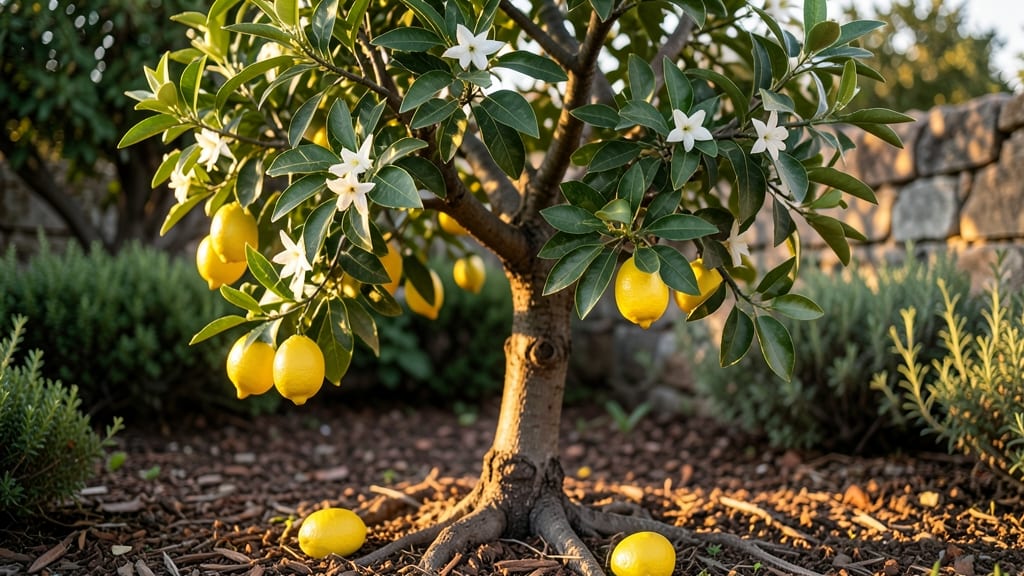
Spiky citrus trees with thorns can be tricky to identify at first glance, but those leaves hold all the clues. 🌿 I’ve spent years sorting through backyard citrus collections, and I’ve found that leaf shape, size, and texture reveal the variety faster than fruit alone ever could.
The key is comparing your unknown specimen to these five common thorned citrus trees—each with distinct foliage traits that set them apart.
Start with leaf size: lemon and lime trees have smaller, glossier leaves (2-4 inches long), while orange and grapefruit varieties sport larger, slightly duller foliage (4-8 inches). Then check the edges—trifoliate orange leaves have three leaflets, while others stay simple.
The Mexican lime stands out with its thick, leathery texture and pronounced veins. Thorns alone won’t tell you everything, but paired with these leaf details, you’ll narrow it down fast.
Once you’ve matched the leaves, confirm with bark and fruit: sour orange bark is rough and deeply furrowed, while kumquat branches stay smooth with tiny, oval leaves. The real game-changer? Smell the leaves—lemon and lime varieties carry that signature citrus aroma, even before fruit appears.
This quick method works for backyard trees, container citrus, or even wild specimens you’ve stumbled upon.
Still unsure? Snap a photo and use a plant ID app—just note those leaf details first. The more you practice, the easier it gets. I’ve identified dozens this way, and you will too once you start noticing those subtle differences. Now go check your citrus collection with fresh eyes!
Root Causes of Thorny Citrus Trees
Thorny citrus trees might seem like an unexpected surprise, but they’re often the result of natural evolutionary adaptations, human intervention, or environmental stress. Understanding these causes helps gardeners and citrus enthusiasts identify the right variety and manage growth effectively.
Below, we break down the key reasons why some citrus trees develop thorns—and why others don’t.
Some citrus varieties, like trifoliate orange (Poncirus trifoliata) or its hybrids (e.g., citrange, flying dragon, or calamondin), evolved thorns as a defense mechanism against herbivores. Here’s why: - Thorns as protection: In the wild, thorns deter animals—like deer, rabbits, or even insects—from feeding on leaves or bark.
This trait is deeply ingrained in the genetics of certain citrus relatives, particularly those from East Asia. - Hybrid vigor: When trifoliate orange is crossbred with sweeter citrus (like oranges or lemons), the thorny trait can persist, especially if the parentage includes a significant portion of Poncirus DNA. - Leaf structure matters: Thorns often accompany trifoliate (three-leaf) foliage, a hallmark of trifoliate orange.
If your tree has three leaflets per stem and sharp thorns, it’s likely a hybrid with Poncirus ancestry.
Pro tip: 💡 If you’re growing citrus for low-maintenance landscapes, avoid pure trifoliate orange or its hybrids—they’re notorious for thorns!
Thorny citrus trees often arise from intentional or accidental hybridization between thorny and thornless varieties.
Key examples: - Citrange (Citrus × citrangia): A hybrid of trifoliate orange (thorny) and sweet orange (thornless), citrange trees frequently develop thorns, especially if the trifoliate parent dominates. - Flying dragon (Citrus medica × Poncirus): This hybrid combines buddha’s hand (thornless) with trifoliate orange, resulting in a tree that may or may not have thorns, depending on the specific clone. - Lemon or lime hybrids: Some cold-hardy citrus (like ‘Improved Meyer lemon’) can develop thorns if they inherit Poncirus genes, though this is less common.
Actionable insight: 🔍 If you’re buying a citrus tree labeled as a hybrid, check the parentage—thorny traits are more likely if Poncirus trifoliata is mentioned.
While genetics play the biggest role, environmental factors can sometimes encourage thornier growth, even in normally thornless varieties: - Poor soil conditions: Nutrient deficiencies (especially nitrogen or phosphorus) or compacted soil can stress the tree, leading to more aggressive thorn production as a survival tactic. - Water stress: Both overwatering and drought can trigger thorn development.
Thorns act as a way to conserve water by reducing leaf surface area (a trait seen in some drought-adapted plants). - Pruning practices: Heavy pruning or topping can stimulate thornier regrowth, as the tree prioritizes defensive structures over fruit production.
Quick fix: 💧 Maintain consistent moisture and prune strategically (avoid harsh cuts) to minimize unwanted thorns in sensitive varieties.
In rare cases, a citrus tree may develop more thorns than usual as a response to:
- Insect infestations: If pests (like aphids or scale) are damaging new growth, the tree may increase thorn density to protect vulnerable stems.
- Fungal or bacterial infections: Weakened trees under attack may prioritize defense over fruit, leading to thornier branches.
- Physical damage: If the tree is frequently grazed by animals or vandalized, it may produce thorns more aggressively to deter future harm.
Prevention tip: 🛡️ Monitor for pests early and protect young trees with netting or fencing to reduce stress-related thorn growth.
Not all thorny trees with citrus-like leaves are actual citrus!
Some look-alikes include: - Pyracantha (Firethorn): Glossy leaves, dense thorns, and small berries—but it’s a rosaceous plant, not citrus. - Hawthorn (Crataegus): Thorny stems and lobed leaves, but it’s unrelated to citrus. - Buckthorn (Rhamnus): Small, citrus-like leaves with sharp thorns, but it’s a different family entirely.
Key difference: 🔎 True citrus thorns are usually single, straight, and sharp, while imposters may have clusters or curved thorns.
Some thorny citrus varieties are intentionally cultivated for specific purposes:
- Living fences or hedges: Thorny citrus (like trifoliate orange) is sometimes planted as a natural barrier due to its impenetrable thorns.
- Rootstock choices: Grafted citrus trees often use thorny rootstocks (like trifoliate orange) for disease resistance and cold hardiness, even if the scion (top growth) is thornless.
Grower note: 🌱 If you’re grafting citrus, choose a thornless scion (like a sweet orange) and a thornless rootstock alternative (like Swingle citrumelo) to avoid unwanted thorns.
Fixing Thorny Citrus Trees Naturally
Citrus trees with thorns can be a nuisance—whether you’re pruning for safety, managing pests, or simply shaping your tree. The good news? Most issues causing excessive thorns (or misidentified citrus varieties) can be resolved with targeted care.
Below are practical, step-by-step solutions tailored to common causes, from overgrowth to pest stress, plus prevention tips to keep your tree healthy and thorn-free.
Cause: Uncontrolled growth or incorrect pruning triggers thorn production as a defense mechanism. Fix:
- 🔪 Prune in late winter/early spring (before new growth starts) to avoid stressing the tree.
- 🍃 Focus on "thorn clusters"—cut just above a leaf node (bud) to encourage outward growth.
- ⏰ Avoid heavy pruning in summer—heat stress can worsen thorniness.
Pro Tip: Use sterilized bypass pruners (not shears) to prevent disease. Wipe blades with rubbing alcohol between cuts! ✨
Cause: Infestations (aphids, scale, mites) or fungal issues force the tree to produce thorns for protection. Fix:
- 💦 Spray with neem oil (1 tsp per quart of water) weekly for pests. Reapply after rain.
- 🌡️ Monitor for fungal spots (yellowing, black mold). Treat with copper fungicide if needed.
- 🐝 Encourage beneficial insects (ladybugs, lacewings) by planting marigolds nearby.
Pro Tip: Early detection saves the tree! Check undersides of leaves and new growth weekly. 🔍
Cause: Some citrus (like trifoliate orange) are naturally thorny. Others (e.g., meyer lemon, calamondin) have fewer thorns. Fix:
- 🌳 Replace high-thorn varieties with low-thorn options:
- Meyer Lemon (semi-dwarf, minimal thorns)
- Calamondin (ornamental, small thorns)
- Satsuma Mandarin (thorn-free, cold-hardy)
- 🌱 Graft onto thorn-less rootstock if keeping the same variety.
Pro Tip: Dwarf varieties (like Improved Meyer Lemon) are easier to manage and often less thorny! 🌿
Cause: Lack of nitrogen, phosphorus, or zinc weakens the tree, prompting thorny growth. Fix:
- 📊 Test soil (pH 6.0–7.0 ideal for citrus). Adjust with lime if too acidic.
- 💪 Use a balanced citrus fertilizer (6-6-6 or 8-3-9) in early spring and summer.
- 🍊 Add compost around the drip line (not the trunk) for slow-release nutrients.
Pro Tip: Over-fertilizing causes more harm! Follow package rates—citrus trees need less than lawns. 🚫💥
Keep your citrus tree thorn-friendly with these easy habits:
- 💧 Water deeply 1–2x/week (drought stress = more thorns).
- 🌤️ Protect from frost (thorniness increases in stressed trees).
- 🍋 Harvest regularly—overripe fruit can signal poor health, triggering thorn growth.
- 🌳 Mulch with wood chips (2–3 inches) to retain moisture and reduce stress.
Final Note: Most thorn issues are manageable—focus on health first, then prune. With the right care, your citrus tree can stay lush, productive, and safer to handle! 🍋✨
Frequently asked questions
Why do some citrus trees have thorns while others don’t?
Thorns appear in citrus trees due to genetics—varieties like trifoliate orange or its hybrids (such as citrange) naturally develop thorns as a defense mechanism. Thornless varieties like Meyer lemon or Satsuma mandarin lack these genes. Even within thorny types, individual trees may show fewer thorns if they inherit less of the Poncirus ancestry.
Can I safely remove thorns from my citrus tree?
Yes, but use caution! Prune thorns during late winter/early spring when the tree is dormant. Cut just above a leaf node to encourage new growth. Wear gloves and use sterilized bypass pruners to avoid damaging the tree or spreading disease. Avoid heavy pruning in summer, as it can stress the plant and trigger more thorns.
What’s the difference between trifoliate leaves and regular citrus leaves?
Trifoliate leaves have three distinct leaflets per stem, while standard citrus leaves are simple (single). The trifoliate pattern is a dead giveaway for trifoliate orange or its hybrids (like calamondin). Even thornless hybrids may retain this leaf structure if Poncirus genes are present.
Are thorny citrus trees more disease-prone?
Not necessarily—thorns themselves don’t cause disease. However, thorny varieties like trifoliate orange are often used as rootstocks for grafting, which can improve disease resistance in the scion (top growth). The key is proper care: healthy trees (regardless of thorns) resist pests and diseases better. Focus on soil health, watering, and pest control to keep your tree thriving.
How can I tell if my thorny tree is actually citrus?
Look for these clues: citrus-like leaves (oval, glossy), aromatic foliage, and small white flowers. Non-citrus thorny trees (like pyracantha) often have clusters of thorns or berries. If unsure, snap a photo and use a plant ID app—just note the leaf shape, thorn arrangement, and bark texture first for faster results.