
Pruning
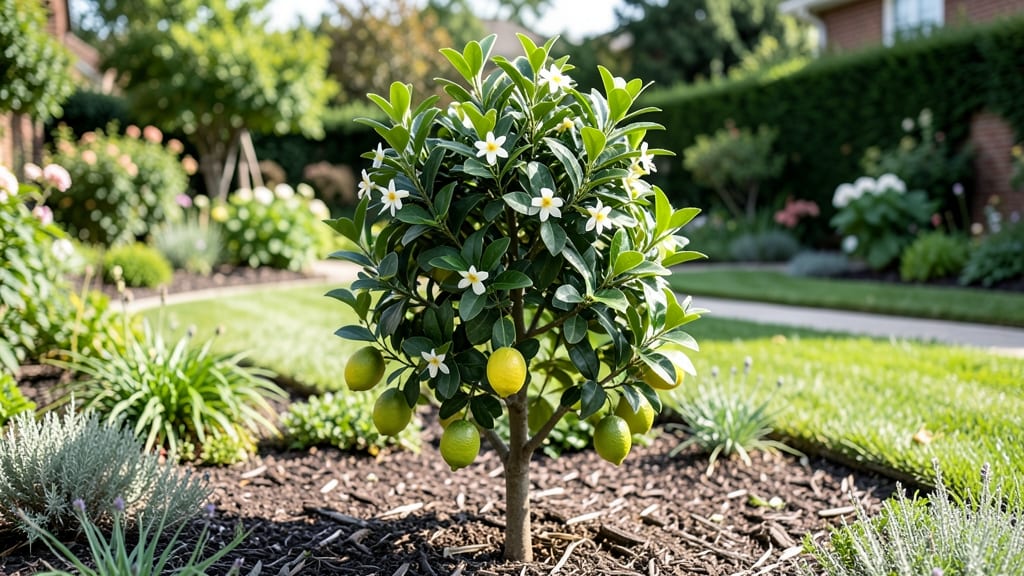
To grow a miniature lemon tree indoors, you'll need bright indirect sunlight for 6-8 hours daily, well-draining soil, and consistent watering that prevents root rot. Prune strategically to shape the tree and boost fruit production, using supplemental grow lights if natural light falls short.
Indoor lemon trees thrive when you mimic their Mediterranean climate. 🌿 The key is balancing light exposure—too little causes yellowing leaves, while direct sun can scorch delicate foliage.
I've found that placing your tree within 3 feet of a south-facing window or using full-spectrum LED grow lights (12-16 hours/day) creates ideal conditions. The right light triggers photosynthesis, which directly impacts fruit development. For best results, rotate your tree weekly to ensure even growth.
Beyond light, soil composition plays a crucial role. A mix of cactus/succulent soil with perlite ensures proper drainage, while maintaining a slightly acidic pH (6.0-7.0) prevents nutrient deficiencies. I recommend fertilizing every 4-6 weeks during spring and summer with a citrus-specific formula to support flowering and fruiting.
Regular pruning—removing dead branches and thinning crowded growth—encourages air circulation and redirects energy to fruit production.
💡 In This Article
- Optimal Light Conditions for Indoor Lemon Tree Fruit Growth
- Step-by-Step Care Guide for Miniature Lemon Trees Indoors
Optimal light conditions for indoor lemon tree fruit growth
Lemon trees rely on specific light wavelengths—particularly blue (400-500nm) and red (600-700nm) spectrums—to drive photosynthesis. These wavelengths trigger chlorophyll production and energy conversion, which directly fuels fruit development.
Without sufficient blue light, leaves may appear pale or elongated, while inadequate red light reduces flowering. 💡 Natural sunlight provides this full spectrum, but indoor conditions often lack the intensity needed for fruit production.
For indoor cultivation, position your tree within 1-3 feet of a south-facing window to maximize exposure. If natural light is insufficient (common in northern climates or during winter), supplement with full-spectrum LED grow lights that replicate sunlight's 10,000-15,000K color temperature.
A 12-16 hour photoperiod mimics summer daylight, encouraging consistent growth. I've seen trees under grow lights produce fruit within 2-3 years, compared to 5+ years with inadequate light.
Seasonal adjustments are key—reduce light exposure to 8-10 hours/day in winter to simulate dormancy, then gradually increase in spring. This mimics natural cycles and prevents stress.
Artificial lights should be placed 6-12 inches above the canopy to avoid heat damage while maintaining intensity. 🌱 The goal is to replicate the 2,000-3,000 foot-candles of light lemon trees receive outdoors, which is roughly 10-20 times brighter than typical indoor lighting.
Watch for visual cues: dark green, glossy leaves indicate optimal light, while yellowing or leaf drop signals deficiency. Prune leggy growth (stems >6 inches long) to redirect energy to fruit-bearing branches.
Even with grow lights, rotate your tree quarter-turn weekly to prevent uneven growth toward the light source. This ensures balanced photosynthesis across all leaves.
For advanced growers, consider red/blue LED combinations (660nm red + 450nm blue) at a 1:3 ratio for maximum efficiency. These setups can produce 30-50% more fruit than white LEDs by targeting specific photosynthetic pathways. 💫 The trade-off?
Higher initial cost, but the yield difference is noticeable in just one fruiting season.