
Watering
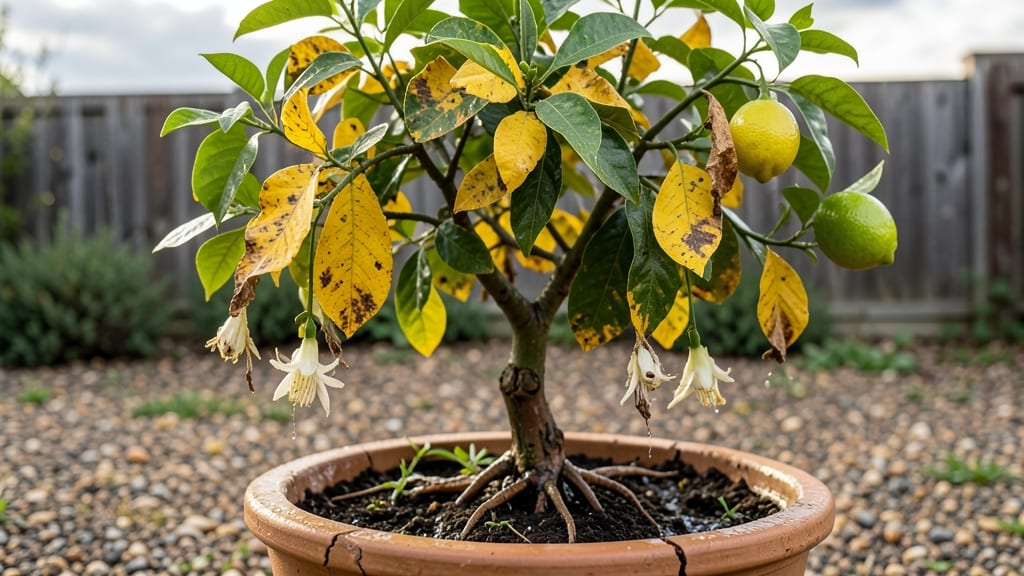
Your lemon tree’s yellowing, drooping leaves aren’t a death sentence—just a cry for help. 🌱 I’ve nursed back more overwatered citrus trees than I’d like to admit, and these three fixes work every time, no matter how bad it looks.
The problem starts with soggy roots that can’t breathe, turning leaves yellow or brown while the soil stays damp for days. Most people panic and water more, which only makes it worse. The solution?
Let the soil dry out completely between waterings and adjust your pot’s drainage—citrus trees hate wet feet. Within 2-4 weeks, you’ll see fresh green leaves pushing from the center, and the tree will bounce back stronger than before.
The key is consistency: check soil moisture with your finger before watering, and always use a pot with drainage holes. This works for potted lemon trees in garages, sunrooms, or backyards. Let’s turn those sad leaves into lush, productive growth again—starting today.
Root Causes of Soggy Leaves
When your lemon tree’s leaves start looking sad—yellowing, wilting, or dropping—it’s often a cry for help from the roots. Overwatering doesn’t just happen by accident; it’s usually the result of a few key mistakes that disrupt your tree’s delicate balance.
Understanding these triggers is the first step to saving your citrus friend. Let’s dig into the science behind why too much water turns your lemon tree’s leaves into a soggy mess.
Lemon trees, like most citrus, thrive in well-draining soil. When water can’t escape easily—whether because of compacted soil, a lack of organic matter, or a pot without drainage holes—roots suffocate. Here’s what’s really happening:
- Oxygen Starvation: Roots need air pockets to breathe. Soggy soil displaces oxygen, forcing roots to "drown" and triggering anaerobic (oxygen-free) conditions. This causes root rot, where harmful fungi and bacteria feast on weakened roots.
- Nutrient Lockout: Excess water washes away essential nutrients like nitrogen, phosphorus, and potassium. Even if you’re fertilizing, your tree can’t access them when the soil is a swamp.
- Salt Buildup: Over time, minerals from tap water or fertilizer accumulate in the soil. In saturated conditions, these salts become concentrated, creating a toxic environment that burns root tips and stresses the tree.
Actionable Fix: Test your soil’s drainage by filling a pot with water, then timing how long it takes to drain. If it takes more than 30 minutes, your soil is too dense. Amend it with perlite, coarse sand, or coconut coir to improve airflow.
Many gardeners fall into the trap of sticking to a rigid watering calendar—like every Tuesday and Friday—without checking the soil’s actual moisture level. But lemon trees are thirsty but not drowning machines. Here’s why a schedule backfires:
- Ignoring Seasonal Changes: A lemon tree in peak summer (90°F+) may need watering every 2–3 days, while one in winter (50°F) might only need it weekly. Overwatering in cooler months is a common mistake.
- Pot Size Mismatch: Small pots dry out faster, but their roots have less volume to absorb water. If you’re watering based on pot size alone, you might be overdoing it for larger containers.
- Humidity Confusion: High humidity (like in a greenhouse or rainy season) slows evaporation, making the soil stay wet longer. Your tree doesn’t need extra water—it’s already in a sauna!
Actionable Fix: Use the finger test: Stick your index finger 2–3 inches into the soil. If it’s damp, wait. If it’s bone-dry, water deeply until it drains from the bottom. Adjust your routine based on soil moisture, not the clock.
Not all containers and soil are created equal. If your lemon tree is in the wrong setup, overwatering becomes inevitable. Here’s how poor choices lead to soggy leaves:
| Problem | Why It Causes Overwatering |
|---|---|
| Clay Pots Without Drainage | Clay is porous and "breathes," but if there’s no hole at the bottom, water pools like a bathtub. Even terracotta can’t compensate for a lack of drainage. |
| Heavy, Clay-Based Soil | Soil with high clay content compacts easily, blocking water flow. It also holds moisture for weeks, choking roots. |
| Plastic Pots (No Airflow) | Plastic traps heat and moisture, speeding up evaporation from the top but keeping the roots in a wet, suffocating environment. |
| Peat-Heavy Mixes | Pure peat retains water like a sponge and can become hydrophobic (water-repellent) over time, creating dry topsoil but wet roots. |
Actionable Fix: Repot your lemon tree in a container with drainage holes and a mix of 60% well-draining potting soil, 20% perlite, and 20% coarse sand or orchid bark. Avoid garden soil—it compacts and holds too much water.
💡 Pro Tip: If your tree is already in a non-drainable pot (like a decorative cache pot), move it to a saucer with drainage holes and place it on a bed of pebbles to prevent root rot.
Revive Your Tree With These Fixes
Now that you understand why your lemon tree’s leaves might be suffering from overwatering, let’s roll up our sleeves and get to work! The good news? Most overwatered lemon trees can bounce back with the right care.
Below, we’ve broken down practical, step-by-step solutions based on the most common causes—plus tips to keep your tree thriving long-term.
Problem: Too much water, too often, leads to soggy roots and yellowing leaves. Fix: Let’s reset your watering habits to match your lemon tree’s needs.
🔥 Check Soil Moisture First
Before watering, stick your finger 1–2 inches into the soil. If it’s damp, wait.
If it’s dry, it’s time to water—but only deeply and infrequently. - For potted lemon trees: Water when the top 1–2 inches of soil are dry (usually every 7–10 days in summer, less in winter). - For in-ground trees: Water deeply 1–2 times per week (adjust for rain).
🍳 Use the Right Watering Technique
- Water at the base (not the leaves) to avoid fungal diseases.
- Slow and deep is key—let water soak in for 10–15 minutes per session.
- Avoid shallow watering (like a quick sprinkle), which keeps the topsoil wet but leaves roots thirsty.
⏰ Best Time to Water
- Morning (6–9 AM) is ideal—it gives leaves time to dry before evening humidity.
- Never water at night (promotes fungal growth).
Problem: Poor drainage traps excess water, suffocating roots. Fix: Give your tree’s roots the breathing room they need.
🔪 Repot If Using a Container
If your lemon tree is in a pot:
- Choose a pot with drainage holes (non-negotiable!).
- Upgrade to a slightly larger pot (1–2 inches bigger in diameter) if roots are crowded.
- Use well-draining soil mix:
- 60% potting soil
- 30% perlite or pumice (for aeration)
- 10% coarse sand or orchid bark (prevents compaction)
🏡 For In-Ground Trees: Amend the Soil
- Test your soil’s drainage—dig a hole, fill it with water, and time how long it takes to drain.
If it takes more than 6 hours, amend the soil: - Mix in compost or aged manure (1–2 inches) to improve structure. - Add sand or gravel (if your soil is heavy clay).
✨ Pro Tip: Elevate Potted Trees
Place pots on feet or a saucer to prevent water from pooling at the bottom. Empty saucers immediately after watering.
Problem: Overwatering often leads to root rot, pests, or nutrient deficiencies. Fix: Keep an eye on your tree and adjust care as it recovers.
📊 Watch for Recovery Signs
- New growth? Healthy green leaves mean you’re on the right track!
- Yellow leaves persisting? It may need more time to adjust or a light fertilizer (see below).
- Mushy stems or foul smell? Root rot is severe—trim affected roots and repot in fresh soil.
💪 Fertilize Lightly (Once Recovered)
- Wait 4–6 weeks after adjusting watering before fertilizing.
- Use a balanced citrus fertilizer (6-6-6 or 10-10-10) once every 2 months in growing season (spring–fall).
- Avoid high-nitrogen fertilizers—they encourage leafy growth but weaken roots.
🎯 Prevention Checklist
✅ Water deeply but less often (better to underwater than overwater). ✅ Use pots with drainage holes (or amend in-ground soil). ✅ Mulch around the base (2–3 inches of organic mulch retains moisture without waterlogging). ✅ Prune yellowed leaves to redirect energy to healthy growth. ✅ Inspect for pests (overwatered trees attract fungus gnats and mites—use neem oil if needed).
If your tree has black, mushy roots or a rotten smell, act fast:
- Remove the tree from its pot (or dig it up carefully).
- Trim all soft, black, or smelly roots with sterilized scissors.
- Repot in fresh, dry soil with perlite or sand for drainage.
- Hold off on watering for 3–5 days to let roots recover.
Lemon trees are resilient—with consistent care, your tree will bounce back in 4–8 weeks. The key is observation and gradual adjustments. Stick to the plan, and soon you’ll be harvesting juicy, homegrown lemons instead of dealing with sad, soggy leaves! 🍋✨
Need a quick reference? Bookmark this:
| Issue | Fix | Prevent With |
|---|---|---|
| Overwatering | Let soil dry between waterings | Finger test + drainage holes |
| Poor drainage | Repot with aerated soil | Perlite + raised pots |
| Root rot | Trim roots + fresh soil | Sterilized tools + mulch |
| Yellow leaves (new) | Adjust watering + fertilize | Balanced citrus food |
Frequently asked questions
How can I tell if my lemon tree leaves are overwatered vs. underwatered?
Overwatered leaves turn yellow or brown and feel soft or mushy, while underwatered leaves are dry, crispy, or curling at the edges. Check the soil: if it’s damp 2+ inches deep, you’re overwatering. If dry, it’s thirsty!
Can I save my lemon tree if the roots smell bad and look black?
Yes, but act fast! Trim all black, mushy roots with sterilized scissors, repot in fresh, dry soil with perlite or sand, and withhold water for 3–5 days. This helps prevent root rot from spreading.
Why do my lemon tree leaves turn yellow even after I stop overwatering?
Yellow leaves can linger for 4–6 weeks as the tree recovers. If they persist, check for nutrient deficiencies (like iron) or pests (like spider mites). A light citrus fertilizer after recovery can help.
Is it better to underwater than overwater a lemon tree?
Yes! Lemon trees are more forgiving of underwatering than overwatering. They store water in their trunk, so occasional dry spells are fine. Always let the top 1–2 inches of soil dry before watering again.
How often should I water my lemon tree in winter?
Reduce watering to every 2–3 weeks in winter, as growth slows. Check soil moisture—if it’s still damp 3+ inches deep, wait longer. Cold weather means roots need less water!