
Pruning
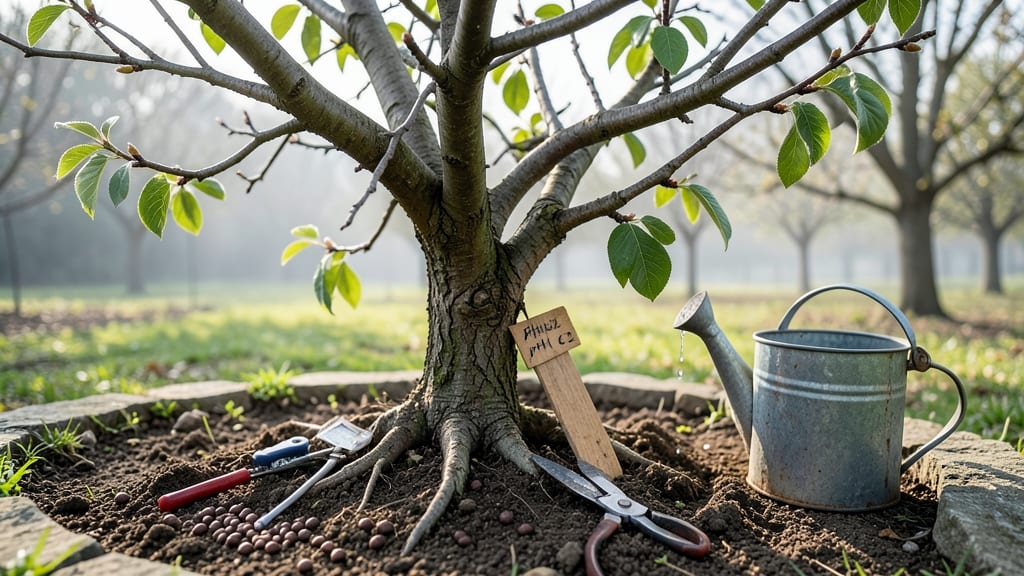
A plum tree not flowering can feel like a gut punch after years of hoping for those fragrant pink blooms. 🌸 The truth is, most plum trees need a little strategic pruning to reset their energy—something I learned the hard way after three seasons of bare branches.
The good news? Corrective pruning in late winter can wake up dormant flower buds and set you up for a spectacular spring display.
Age, sunlight, and past pruning mistakes are usually the culprits. Young trees under 5 years often skip blooming while they focus on roots, while older trees may need aggressive thinning to improve airflow.
Nutrient imbalances—especially too much nitrogen—can also divert energy away from flowers. The fix starts with sharp pruning shears and a clear plan to open up the canopy.
By next spring, you’ll see clusters of buds forming where you’ve made your cuts. I’ve restored blooms on neglected trees by removing 20-30% of old wood and redirecting growth to younger, more vigorous branches.
The key is timing: prune when the tree is dormant, and avoid heavy cuts in fall when new growth can’t harden off before winter.
For stubborn cases, consider a soil test to check for deficiencies or consult a local arborist. Most plum trees respond within 1-2 seasons to proper care—just give them a chance to rebound. The payoff? A tree heavy with blossoms that’ll attract bees and fill your yard with fragrance by March.
Root Causes Behind Missing Blooms
Plum trees are known for their stunning spring blossoms, but when they fail to flower, it’s often a sign that something fundamental is out of balance. Understanding the why behind this issue is the first step toward bringing back those vibrant blooms.
Below, we break down the most common reasons your plum tree might be skipping its floral show—and what science says about each one.
---
Plum trees (Prunus species) are sun-worshippers, and inadequate light is one of the most common reasons they skip flowering. These trees require at least 6–8 hours of direct sunlight daily to trigger the hormonal signals that initiate bud formation.
Why it happens: - Photosynthesis slowdown: Low light reduces energy production (glucose), which is essential for flower bud development. Without enough sunlight, the tree prioritizes leaf growth over reproductive efforts. - Chilling hours disruption: Many plum varieties need a dormancy period (cool winter temps) and sufficient sunlight in spring to break dormancy and flower. Shady spots can delay or prevent this transition. - Weak structural growth: Shade-stressed trees allocate energy to survival (e.g., sparse foliage) rather than flowering.
Actionable fix: - Move potted plum trees to sunnier locations or thin nearby structures (buildings, dense trees) casting shade. - If the tree is young, consider transplanting it to a south- or west-facing area where it can bask in full sun.
---
Most plum trees are dormant-flowering, meaning they need a specific number of cold hours (typically 400–1,000 hours below 45°F/7°C) during winter to trigger bloom signals. Without this, the tree stays in a "holding pattern" and skips flowering.
Why it happens: - Mild winters: Regions with warm winters (e.g., Zone 8–10) may not provide enough chilling hours for standard plum varieties, causing them to remain dormant. - Urban heat islands: Cities with concrete and asphalt can trap heat, raising soil temperatures and reducing effective chilling. - Young trees: Immature trees may not have fully developed the endodormancy (deep winter rest) required for flowering.
Actionable fix: - Choose low-chill plum varieties (e.g., ‘Santa Rosa’, ‘Methley’) if you live in warm climates. - Use artificial chilling (e.g., shade cloth in summer to reduce heat stress) or delay pruning until after the last frost to encourage dormancy.
---
While plum trees need nutrients to grow, too much nitrogen (a common fertilizer mistake) can backfire by promoting leafy growth at the expense of flowers. Flowers require a different hormonal balance—one that’s disrupted when nitrogen dominates.
Why it happens: - Excess nitrogen: Encourages vegetative growth (leaves/stems) while suppressing reproductive growth (flowers/fruit). - Potassium deficiency: Potassium is critical for flower bud formation and stress resistance. A lack of it weakens the tree’s ability to produce blooms. - Micronutrient deficiencies: Zinc, boron, and magnesium are often lacking in soils, and plum trees require boron for cell wall development in flowers.
Actionable fix: - Test your soil (pH 6.0–7.0 is ideal) and amend with balanced fertilizer (e.g., 10-10-10 or 5-10-10 ratio). - Apply potassium-rich compost or wood ash (for potassium) in early spring. - For boron deficiency, use borax (follow package rates) or boron supplements in spring.
---
Pruning is essential for plum trees, but aggressive or poorly timed cuts can remove flower buds (which form on one-year-old wood in many varieties) or stress the tree into skipping blooms.
Why it happens: - Late winter pruning: If you prune too late (after buds swell but before leaves emerge), you risk cutting off potential bloom clusters. - Over-thinning: Removing too many branches reduces the tree’s photosynthetic capacity, leaving it energy-starved for flowering. - Top-heavy cuts: Heavy pruning in one season can delay recovery, pushing the tree into survival mode instead of reproduction.
Actionable fix: - Prune dormant plum trees in late winter/early spring (just before buds break). - Avoid heavy pruning—limit cuts to 15–20% of the canopy per year. - Focus on opening the center (to improve airflow) rather than drastic shape changes.
--- Pests like aphids, scale insects, or borers and diseases (e.g., bacterial leaf spot, silver leaf fungus) drain a plum tree’s energy. When a tree is chronically stressed, it prioritizes defense over flowering.
Why it happens: - Sap-sucking pests: Aphids and scale insects reduce photosynthesis by damaging leaves, starving the tree of energy for blooms. - Root damage: Grubs, nematodes, or root rot (from overwatering) weaken the tree’s root system, limiting nutrient uptake for flower production. - Fungal infections: Diseases like silver leaf (caused by Chondrostereum purpureum) can girdle branches, cutting off nutrient flow to potential bloom sites.
Actionable fix: - Inspect leaves/bark for pests (use neem oil or horticultural oil for treatment). - Improve drainage to prevent root rot (raise beds or amend soil with compost). - Prune infected branches (sterilize tools with rubbing alcohol) and dispose of them.
--- Plum trees are drought-tolerant once established, but water stress—whether from overwatering or underwatering—can halt flower production.
Why it happens: - Overwatering: Leads to root suffocation and nutrient leaching, weakening the tree’s ability to form buds. - Underwatering: Causes wilting and leaf drop, signaling the tree to conserve energy rather than flower. - Irregular watering: Fluctuating moisture levels stress the tree, triggering survival responses over reproductive ones.
Actionable fix: - Water deeply but infrequently (1–1.5 inches per week, more in extreme heat). - Mulch around the base (2–3 inches of organic mulch) to retain moisture and regulate soil temperature. - Avoid wet feet—ensure the planting site has good drainage (plum trees hate soggy roots).
--- Not all plum trees flower every year, and some varieties are less reliable than others. Age also plays a role—young trees (under 3–5 years) may not have the energy to bloom heavily.
Why it happens: - Young trees: Focus energy on root and trunk development before flowering. - Dwarf or columnar varieties: Some modern cultivars (e.g., ‘Tokyo Series’) are bred for fruit production over flowers, so blooms may be sparse. - Biennial flowering: Some plum trees alternate between heavy and light flowering years as a natural cycle.
Actionable fix: - Be patient—most plum trees flower reliably by age 5–7. - Choose heavy-blooming varieties like ‘Larry Del’ or ‘Elephant Heart’ if flowers are a priority. - If the tree is mature but still not flowering, cross-check other causes (e.g., light, nutrients).
Revive Your Plum Tree’s Blooms
When your plum tree skips its floral show, don’t panic—there’s always a way to coax it back to life! The key is identifying the root cause (or causes) and taking targeted action.
Below, we break down practical fixes for each common issue, plus prevention tips to ensure a spectacular bloom next season.
---
If your plum tree is still young (under 3–5 years), it may simply need more time to establish strong roots and energy reserves before flowering.
How to Help It Along: ✅ 🌿 Provide Optimal Growing Conditions - Sunlight: Ensure it gets 6–8 hours of full sun daily—partial shade can delay blooming. - Soil: Amend heavy or clay soil with compost or organic matter to improve drainage and nutrient uptake. - Water: Keep the soil consistently moist (but not soggy) during the first two growing seasons. Deep watering once a week (or more in extreme heat) encourages root growth.
✅ 🍃 Fertilize Smartly - Use a balanced, slow-release fertilizer (like 10-10-10) in early spring before new growth appears. - Avoid high-nitrogen fertilizers—they promote leafy growth at the expense of flowers. - Pro Tip: 💡 A foliar spray of fish emulsion (high in phosphorus) in late winter can boost flowering potential.
✅ 📅 Patience + Pruning for Structure - Lightly prune in late winter or early spring to remove dead, crossing, or weak branches. - Avoid heavy pruning—young trees need their energy for root development, not just foliage.
Prevention for Next Year: 🔹 Mulch around the base (2–3 inches deep) with wood chips or straw to retain moisture and regulate soil temperature. 🔹 Avoid transplant shock—if you recently moved the tree, wait at least one full growing season before expecting flowers.
---
If your plum tree was heavily pruned (especially in late winter or spring), it may have lost too much energy to produce flowers.
How to Recover: ✅ 🔪 Prune Correctly This Year - When to prune: Late winter (dormant season) is best. Avoid pruning in fall or early spring when buds are forming. - What to remove: Only cut back dead, diseased, or overly dense branches. Never remove more than 25% of the canopy in one season. - Shape it right: Open the center of the tree to allow better airflow and sunlight penetration.
✅ 🍄 Boost Recovery with Nutrients - Apply a phosphorus-rich fertilizer (like bone meal or a 5-10-10 formula) in early spring to encourage blooming. - Avoid nitrogen-heavy feeds—they’ll make leaves grow but delay flowers.
✅ 💧 Hydrate Deeply - Water deeply once a week (or more in drought) to reduce stress. Stress = fewer flowers.
Prevention for Next Year: 🔹 Follow the "Rule of Thirds": Never prune more than 1/3 of the tree’s branches in a single session. 🔹 Use sharp, clean tools to prevent disease entry—sterilize pruners with rubbing alcohol between cuts.
---
Plum trees need specific nutrients to flower well. If the soil lacks phosphorus or potassium, buds may fail to form.
How to Feed It Right: ✅ 📊 Soil Test First - Get a home soil test kit (or send a sample to a local extension office) to check pH (ideal: 6.0–7.0) and nutrient levels. - Low phosphorus? Add bone meal or rock phosphate. - Low potassium? Use wood ash or a potassium sulfate fertilizer.
✅ 🍃 Organic Fertilizer Plan - Early spring (before buds swell): Apply compost + a balanced fertilizer (like 10-10-10). - Late spring (after first leaves appear): Switch to a low-nitrogen, high-phosphorus feed (like 2-8-4) to push flowering. - Fall (after harvest): Add potassium-rich fertilizer (like greensand) to strengthen roots for next year.
✅ 🌿 Mulch for Nutrient Retention - Spread 2–3 inches of organic mulch (like shredded bark) around the base (but keep it 6 inches away from the trunk). - Pro Tip: 🌡️ Avoid fresh manure—it can burn roots and disrupt nutrient balance.
Prevention for Next Year: 🔹 Top-dress with compost every fall and spring to maintain soil fertility. 🔹 Avoid over-fertilizing—too much nitrogen = leafy growth, no flowers.
---
Plum trees are sensitive to extreme heat, cold, or poor placement. If your tree is struggling with late frosts, drought, or urban pollution, it may skip flowering.
How to Create the Perfect Growing Conditions: ✅ 🌡️ Protect from Late Frosts - Plant cold-hardy varieties (like ‘Stanley’ or ‘Methley’) if you live in a frost-prone zone. - Cover young blossoms with frost cloth if a late freeze is forecasted.
✅ 💦 Water Smartly in Drought - Deep watering (1–2 inches per week) is better than frequent shallow watering. - Mulch heavily to retain moisture and cool roots in summer. - Pro Tip: 🎯 Drip irrigation delivers water directly to roots, reducing stress.
✅ 🏙️ Improve Air Quality - If your tree is near pollution sources (roads, factories), consider relocating it or planting a windbreak (like a hedge) to filter contaminants. - Avoid planting near concrete—heat reflection can stress the tree.
Prevention for Next Year: 🔹 Choose the right location: Full sun, well-draining soil, and protection from strong winds. 🔹 Monitor weather alerts and cover blossoms if frost is predicted.
---
Fungal diseases (like silver leaf disease) or pests (such as borers or aphids) can weaken the tree and prevent flowering.
How to Diagnose & Treat: ✅ 🔍 Identify the Problem - Wilting leaves + black spots? Likely fungal disease (e.g., brown rot). - Holes in bark or sawdust-like frass? Borer infestation. - Sticky leaves + ants? Aphids or scale insects.
✅ 🌿 Treat Fungal Issues - Prune infected branches and dispose of them (don’t compost). - Apply copper fungicide in early spring and fall as a preventative. - Remove fallen leaves in autumn to reduce spores.
✅ 🐜 Combat Pests Naturally - Borers: Drill out larvae with a screwdriver, then seal holes with pruning sealant. - Aphids/Scale: Spray with soapy water (1 tsp mild soap per quart of water) or neem oil. - Pro Tip: 💡 Encourage beneficial insects (like ladybugs) by planting marigolds or dill nearby.
Prevention for Next Year: 🔹 Inspect trees monthly for early signs of pests/disease. 🔹 Keep the area clean—remove debris and fallen fruit to prevent fungal growth.
--- Before winter arrives, give your plum tree a health boost with these steps: ✔ Prune in late winter (remove dead wood, thin out branches). ✔ Fertilize in early spring (phosphorus-focused). ✔ Mulch & water deeply (1–2 inches per week). ✔ Protect from frost (if needed). ✔ Monitor for pests/disease (treat early).
With the right care, your plum
Frequently asked questions about plum trees not flowering
Why does my mature plum tree suddenly stop flowering after years of blooms?
Mature plum trees often skip flowering due to over-mature wood or improper pruning. If you've been pruning too late in the season (after buds form), you may have removed potential bloom sites. Another common cause is nutrient imbalance—too much nitrogen without enough phosphorus or potassium. Test your soil and adjust fertilizer ratios to 5-10-10 or 2-8-4 to encourage flowering next year.
Can I force my plum tree to flower if it's been neglected for several years?
Yes, but it requires aggressive but careful recovery. Start by pruning back 20-30% of old wood in late winter to stimulate new growth. Apply phosphorus-rich fertilizer (like bone meal) and ensure 6-8 hours of sunlight daily. Young plum trees often need 2-3 years of proper care before they reliably flower again—patience is key!
What's the difference between a plum tree that's dormant and one that won't flower?
A dormant plum tree has buds that just haven't opened yet (check for swollen buds in late winter), while a non-flowering tree shows no buds at all. Dormancy is normal in cold climates, but if your tree lacks buds by early spring, it's likely suffering from light deprivation, nutrient deficiencies, or improper pruning. The fix depends on the root cause—test soil, check sunlight exposure, and review your pruning history.
Will pruning my plum tree too hard this year prevent flowers next spring?
Yes, if you remove more than 25% of the canopy in one season, you risk delaying or preventing flowering for that year. Plum trees form flower buds on one-year-old wood, so aggressive cuts remove potential bloom sites. Instead, focus on light structural pruning (removing dead/diseased branches) and save major reshaping for every 3-4 years.
How do I know if my plum tree needs more sunlight or better nutrients?
Check for these clues: Pale yellow leaves with weak growth = light deficiency; dark green, lush leaves but no flowers = nutrient imbalance. For light issues, move potted trees or thin nearby structures. For nutrients, do a soil test—plum trees need phosphorus (P) and potassium (K) more than nitrogen (N). Apply bone meal or wood ash if deficient.