
Companion Plants
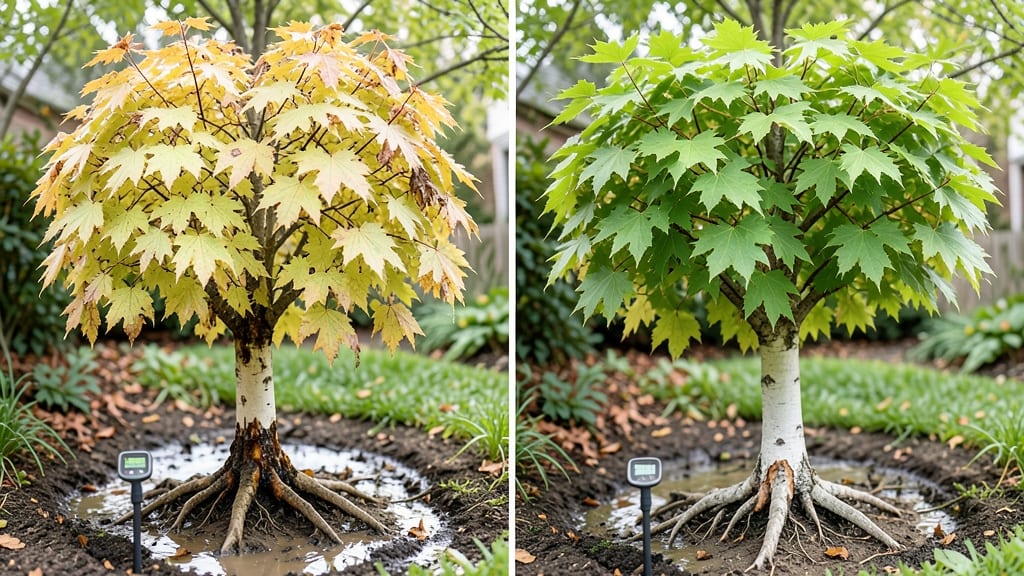
An overwatered maple tree looks like it’s drowning in its own soil—yellowing leaves that cling limply, drooping branches that refuse to bounce back, and roots so soggy they can’t breathe. 🌳 I’ve seen this exact scene play out after weeks of heavy rain or well-meaning gardeners who think "more water is always better."
The first sign? Leaves that start bright yellow along the edges before turning brown and crispy, while the soil smells like wet socks instead of fresh earth.
The real damage happens below ground: roots turn black and mushy, and if you dig down, you might find a slimy, foul-smelling mess where healthy roots should be. Fungal growth—like mushrooms sprouting at the base—is another red flag.
The tree might also shed leaves prematurely, even in summer, as it struggles to survive in waterlogged conditions. This isn’t just wilting; it’s a silent scream for help.
Fixing it starts with cutting back on water—let the top 2-3 inches of soil dry out completely before watering again. Improve drainage by adding organic matter like compost or mulch, and consider raising the tree’s root zone with a mound of soil if your yard stays soggy.
Within weeks, you’ll see new green growth as the roots recover their strength.
Here’s the tricky part: overwatering symptoms mimic pests or disease, so check for bugs or spots on leaves first. But if the soil stays damp for days and the tree looks exhausted, you’ve got your answer.
The good news? Maple trees are tough—they’ll bounce back if you act fast and give them a chance to dry out.
Root Causes Of Overwatering
Overwatering a maple tree isn’t just about too much water—it’s a cascade of environmental and human factors that disrupt the tree’s natural balance. Understanding these causes helps you avoid turning your backyard into a soggy swamp for your maple’s roots.
Here’s why it happens, broken down into the most common culprits:
Maple trees thrive in well-draining soil, but when water can’t escape, roots suffocate. Here’s how drainage fails:
- Clay-Heavy Soil: Clay particles pack tightly, trapping water like a sponge that won’t release. Maple roots need aeration—clay soil holds moisture for weeks, starving roots of oxygen. - Actionable fix: Amend soil with organic matter (compost, sand, or peat moss) to improve porosity.
A soil test can confirm clay dominance.
- Compacted Ground: Foot traffic, construction, or heavy machinery compress soil, crushing root pathways. Compacted zones act like a waterlogged dam, forcing excess moisture into root zones.
- Pro tip: Aerate the soil annually with a manual or mechanical aerator to restore airflow.
- Low-Grade Slopes: Planting maples in depressions or areas where water pools (e.g., near downspouts or gutters) ensures roots sit in standing water.
Even a slight slope can redirect rainwater toward the tree. - Design hack: Create a berm (raised soil mound) around the base to divert water away from the trunk.
Even well-meaning gardeners can drown a maple tree with frequency or volume. Signs you’re overdoing it: - Daily watering: Maple trees only need 1–1.5 inches of water per week (including rain).
Daily top-ups keep roots permanently soggy, mimicking a swamp. - Shallow watering: A light sprinkle wets only the top inch of soil, encouraging roots to grow upward (where they’ll drown). Deep watering (6–12 inches down) trains roots to seek stability. - Automatic sprinklers: If set on a timer without soil checks, they can deliver excessive moisture, especially in rainy seasons. Smart solution: Use a soil moisture sensor to automate when to water, not just how long.
Mulch is a gardener’s best friend—unless it’s applied incorrectly. Common mulch mistakes that trap moisture: - Piled Too High: Mulch should be 2–4 inches deep, never touching the trunk.
A volcano-shaped pile (common error!) blocks airflow and holds water against the bark. - Impermeable Mulch: Plastic or thick cardboard layers seal soil, preventing evaporation.
Opt for wood chips, straw, or pine needles—they allow water to seep through. - No Mulch Ring: Without a 4–6 inch gap between mulch and trunk, moisture pools directly at the roots, inviting root rot.
Not all overwatering is human error—sometimes, nature conspires against your maple: - Heavy Rainfall + Poor Drainage: If your area gets 10+ inches of rain in a week, even well-draining soil can’t keep up.
Maple trees in low-lying areas are especially vulnerable. - Quick fix: Install French drains or swales (shallow trenches) to redirect excess water.
- High Humidity: In tropical or monsoon climates, air humidity reduces evaporation rates, keeping soil damp longer.
Maple trees in these zones need less frequent watering but better drainage. - Frozen or Waterlogged Soil: In winter, ice layers can prevent water from draining, leaving roots in a permanent thaw-melt cycle. Raised beds or gravel layers help in cold climates.
Sometimes, overwatering is a symptom, not the cause—but it often worsens the problem: - Fungal Infections: Excess moisture invites root rot (Phytophthora) or canker diseases, which weaken the tree’s ability to regulate water uptake. - Sap-Sucking Insects: Overwatered trees attract scale insects or aphids, which damage bark and disrupt water transport.
A stressed tree can’t fight back. - Girdling Roots: If roots grow in circles (from compacted soil), they strangle the trunk, reducing water flow. Prune girdling roots 6+ inches from the trunk to restore balance.
Overwatering doesn’t happen in isolation—it’s often a combination of factors:
- Poor drainage → Roots can’t breathe → Oxygen deprivation.
- Frequent watering → Soil stays saturated → Fungal growth.
- Compacted soil → Water pools → Root suffocation.
- High humidity → Slow evaporation → Prolonged wetness.
Result? Yellow leaves, drooping branches, and—if unchecked—tree death. The key is prevention: test your soil, adjust watering, and mimic natural conditions. Your maple will thank you with vibrant foliage and decades of growth!
Reviving Your Maple Tree: Step-by-Step Fixes
Overwatering can turn your once-vibrant maple tree into a sad, soggy mess—but don’t panic! With the right care, you can nurse it back to health. Below, we’ve broken down practical solutions for each common symptom of overwatering, along with prevention tips to keep your tree thriving long-term.
If your maple’s leaves are turning yellow (especially on the lower branches), the roots are likely suffocating from excess moisture. Here’s how to help:
🔥 Step 1: Stop Watering Immediately
- Pause all watering for at least 5–7 days to let the soil dry out.
- If the ground is muddy or puddled, wait even longer—roots need air!
🍳 Step 2: Improve Soil Drainage
- Aerate the soil by gently loosening the top 6–12 inches with a fork or tiller (avoid damaging roots).
- Mulch properly: Spread 2–4 inches of organic mulch (like wood chips or pine straw) 3–6 inches away from the trunk. This helps regulate moisture without smothering the roots.
👨🍳 Step 3: Amend the Soil (If Needed)
- If your soil is clay-heavy or compacted, mix in compost or perlite to improve drainage.
- For heavily waterlogged areas, consider raising the tree’s root zone with a small mound of amended soil.
⏰ Step 4: Monitor & Adjust
- Water only when the top 2 inches of soil are dry (stick your finger in to check!).
- Avoid overhead watering—use a soaker hose or drip irrigation to deliver water directly to the roots.
Wilting or sagging branches signal root stress from too much moisture. Act quickly to save your tree:
🔥 Step 1: Check for Root Rot
- Gently lift a small section of soil near the base. If roots smell rotten or look mushy, root rot is likely.
- Healthy roots should be firm and light brown; dark, slimy roots need urgent care.
🔪 Step 2: Prune Damaged Roots (If Necessary)
- If root rot is severe, sterilize pruning shears and trim away black, mushy roots (but avoid over-pruning).
- Do not prune above-ground branches unless they’re completely dead—this stresses the tree further.
🌡️ Step 3: Boost Soil Health
- Mix beneficial fungi (like mycorrhizae) into the soil to help roots recover.
- Avoid fertilizing until the tree shows new growth—too many nutrients in wet soil can worsen the problem.
🎯 Step 4: Adjust Your Watering Routine
- Water deeply but infrequently—maples prefer 1–1.5 inches per week (including rain).
- Use a moisture meter to track soil dampness and prevent future overwatering.
If you spot mushrooms, mold, or a foul odor near the base, fungal infections are likely. Here’s how to tackle them:
💡 Step 1: Remove Fungal Debris
- Rake away any visible mushrooms, mold, or dead leaves from the base.
- Do not compost infected plant material—dispose of it in a sealed bag.
🔥 Step 2: Apply a Fungicide
- Use a copper-based or phosphite fungicide (like Serenade Garden or Copper Soap) to treat the soil.
- Follow label instructions—reapply every 2–4 weeks until the problem clears.
✨ Step 3: Improve Airflow & Light
- Thin out nearby plants or prune overgrown branches to allow better airflow around the tree.
- Avoid planting in low-lying areas where water pools—maples hate "wet feet."
📊 Step 4: Long-Term Soil Care
- Test your soil’s pH (ideal for maples: 6.0–7.0). Adjust with lime (to raise pH) or sulfur (to lower it) if needed.
- Add coarse sand or gravel to heavy clay soil to prevent compaction.
Once your tree recovers, prevent future overwatering with these habits:
✅ 🌡️ Check Soil Moisture Regularly
- Stick your finger 2 inches into the soil—if it’s damp, wait to water.
✅ 💧 Water at the Right Time
- Early morning (6–10 AM) is best—avoids evening watering, which promotes fungal growth.
✅ 🌳 Choose the Right Location
- Plant maples in well-draining soil and avoid depressions where water collects.
- Slope the ground slightly away from the tree to encourage runoff.
✅ 🌿 Mulch Correctly
- Keep mulch 3–6 inches from the trunk—piling it against the base causes rot.
- Replenish mulch annually to maintain moisture control.
✅ 🌧️ Adjust for Rainy Seasons
- If your area gets consistent rain, reduce watering and let nature do the work.
By following these steps, your maple tree should bounce back within a few weeks to months, depending on the damage. Patience and consistent care are key—your tree will thank you with lush green leaves and strong growth! 🌳💚
Frequently asked questions
How do I tell if my maple tree is overwatered vs. underwatered?
Check the leaves and soil: Overwatered maples show yellowing leaves that stay limp even when dry, while underwatered ones have dry, brown edges that crisp up. Stick your finger 2 inches deep—if soil is soggy, it’s overwatered; if bone-dry, it’s thirsty. Also look for mushrooms at the base (overwatered) or wilted leaves that perk up at night (underwatered).
Can an overwatered maple tree recover?
Yes, but it depends on how severe the damage is! If roots are still firm (not black/mushy), stop watering immediately, improve drainage, and let the soil dry out completely. Within 4-6 weeks, you should see new green growth. For advanced root rot, you may need to prune affected roots and apply fungicide—but act fast, and most maples bounce back with proper care!
Why does my maple tree keep getting overwatered even when I'm careful?
It’s often a soil drainage issue! Clay-heavy soil or compacted ground holds water like a sponge, making it easy to overdo it. Test your soil—if water pools after 30 minutes, you need to amend it with compost or sand. Also check your watering schedule: maples only need 1-1.5 inches per week (including rain), so use a moisture meter to avoid guesswork!
What’s the difference between overwatering and fungal infection symptoms?
Overwatering causes general yellowing and limp leaves, while fungal infections show dark spots, mushrooms, or foamy growth at the base. The key difference? Fungal issues often have visible mold or a musty smell, while overwatering just looks "drowned." If you see both, you’ve got a double problem—fix drainage first, then treat with fungicide.
How long should I wait before watering again after fixing overwatering?
Let the top 3-4 inches of soil dry out completely—this could take 5-10 days depending on your climate. Test with your finger: if it feels dry 1 inch down, it’s safe to water lightly. Avoid deep soaking until you see new growth (usually 2-3 weeks