Pruning
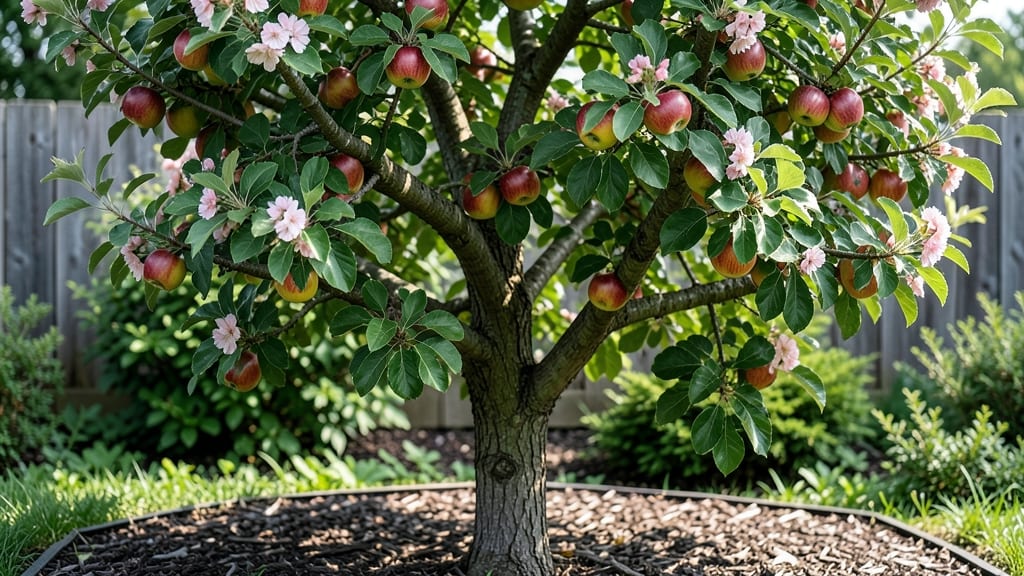
A Honeycrisp apple tree 🍎 can reach a mature height of 15–25 feet—taller than most two-story homes—if left unchecked, but smart pruning keeps it manageable for home gardens.
Picture this: You’ve just planted your Honeycrisp sapling, dreaming of crisp, sweet apples, only to realize years later that its towering branches now block your backyard or crowd out other plants.
That’s why understanding its growth habits—and how to control them—isn’t just helpful, it’s essential for both space and fruit quality.
Most gardeners assume Honeycrisp trees are all the same, but dwarf and semi-dwarf varieties can stay under 12 feet, making them perfect for smaller yards. Meanwhile, standard trees demand more room and regular pruning to prevent overgrowth.
In this guide, I’ll break down how fast these trees grow, the best spacing for planting, and the simple pruning techniques that keep them at your desired height—without sacrificing those juicy Honeycrisp apples you love.

Honeycrisp apple tree height: mature size & growth rate explained
The Honeycrisp apple tree typically reaches a mature height of 12–16 feet when grown as a standard variety, making it a mid-sized fruit tree perfect for suburban gardens. This height allows it to dominate a backyard landscape while remaining manageable with proper care.
Unlike towering varieties like Granny Smith, which can exceed 20 feet, Honeycrisp strikes a balance between space efficiency and fruit production.
If you’re working with limited space, understanding its growth rate is crucial. A young Honeycrisp sapling grows 2–3 feet per year under ideal conditions, reaching about 6–10 feet by its third year.
This rapid growth means it can quickly outpace smaller garden plants if not monitored, so planning ahead is essential for both aesthetics and fruit accessibility.
Here’s how its height compares to other common apple tree types you might consider:
| Variety Type | Mature Height | Growth Rate (Annual) | Best For |
|---|---|---|---|
| Standard Honeycrisp | 12–16 ft | 2–3 ft | Large yards, orchards |
| Semi-Dwarf Honeycrisp | 8–12 ft | 1.5–2.5 ft | Medium gardens, containers |
| Dwarf Honeycrisp | 6–8 ft | 1–2 ft | Small spaces, patios |
| Columnar Honeycrisp | 6–10 ft (narrow) | 1.5–2 ft | Tight urban gardens |
For gardeners with limited space, semi-dwarf or dwarf Honeycrisp varieties are game-changers. These compact versions can be planted just 8–12 feet apart, making them ideal for small backyards or even large containers. I’ve seen them thrive in urban gardens where standard trees would be impossible to accommodate.
The trade-off? They may produce slightly smaller fruit, but the convenience of easy harvesting and minimal pruning often outweighs this.
One common misconception is that Honeycrisp trees grow at the same rate as other apple varieties. In reality, their growth can accelerate if given full sun exposure and rich, well-draining soil.
Poor soil or shade slows growth, which might seem like a blessing for space constraints—but it can also reduce fruit yield. Aim for a location with at least 6–8 hours of direct sunlight daily to balance both growth and productivity.
Pruning plays a critical role in managing height. If left unpruned, a standard Honeycrisp can easily reach 18–20 feet within 5–7 years. However, strategic pruning in late winter or early spring can keep it at 12–14 feet, making it more manageable.
I recommend removing water sprouts (vertical shoots) and thinning branches to improve air circulation, which also reduces disease risk and boosts fruit quality.
When planning your garden layout, account for the tree’s spread, which can reach 10–15 feet wide at maturity. This means standard Honeycrisp trees need at least 15–20 feet of clearance in all directions.
If you’re planting multiple trees, space them 20–25 feet apart to prevent overcrowding and ensure proper airflow. For semi-dwarf varieties, 10–12 feet of spacing is sufficient.
If you’re unsure about your garden’s space constraints, consider starting with a dwarf or semi-dwarf Honeycrisp. These varieties offer the same delicious fruit but with far less maintenance.
I’ve had great success with semi-dwarf trees in my 10x12-foot backyard—pruning just once a year keeps them at a comfortable height while still yielding hundreds of apples annually. The key is to prune young branches early to encourage a bushier, more compact shape.
Remember, the height of your Honeycrisp apple tree isn’t set in stone. With consistent pruning and proper care, you can shape it to fit your garden perfectly—whether that means a tall, elegant specimen or a compact, container-friendly tree.
The choice is yours, and the sweet reward of homegrown Honeycrisp apples makes the effort worthwhile. 🍏
Pruning tips to control Honeycrisp apple tree height & shape
Pruning your Honeycrisp apple tree isn’t just about keeping it small—it’s about shaping it for healthier growth and bigger fruit. Without regular pruning, branches can grow wild, blocking sunlight and making apples hard to reach.
The key is to prune at the right times and angles to encourage a balanced shape while controlling height.
Most gardeners make two big mistakes: pruning at the wrong time of year or cutting too aggressively. I’ve learned the hard way that late winter pruning (just before buds swell) is ideal—it minimizes stress and disease risk.
And never remove more than 25% of the canopy in one season, or your tree might struggle to recover.
Step-by-Step Pruning Guide
- 1 Choose the right tools: Use sharp pruning shears for small branches and a pruning saw for thicker limbs. Sterilize tools with rubbing alcohol to prevent disease spread.
- 2 Remove dead/diseased wood: Look for blackened branches or those with fungal spots. Cut these out first, making clean cuts at a 45-degree angle just above a healthy bud.
- 3 Thin out crossing branches: If two branches rub together, remove the weaker one at its base. This improves air circulation and reduces disease risk.
- 4 Shape for sunlight access: Focus on opening the tree’s center to let light reach inner branches. Aim for a rounded canopy with branches spaced evenly.
- 5 Control height with selective cuts: To keep your tree under 12 feet, prioritize cutting vertical growth (water sprouts) over horizontal branches. Use the third-bud method: cut just above a bud that faces outward.
Timing matters just as much as technique. Late winter (before buds swell) is the best time to prune, but you can also do light pruning in summer to manage new growth. Avoid pruning in fall or early spring, as this can leave wounds vulnerable to pests and disease.
Pro tip: Apply pruning sealant only to cuts larger than ½ inch. For smaller cuts, let the tree seal naturally—it’s more effective and reduces risk of fungal infections. After pruning, water deeply to help the tree recover faster.
With consistent pruning, your Honeycrisp apple tree will stay at your desired height while producing bountiful, high-quality fruit. Start small, focus on health over size, and you’ll enjoy a well-shaped tree for years to come. 🌳✂️